

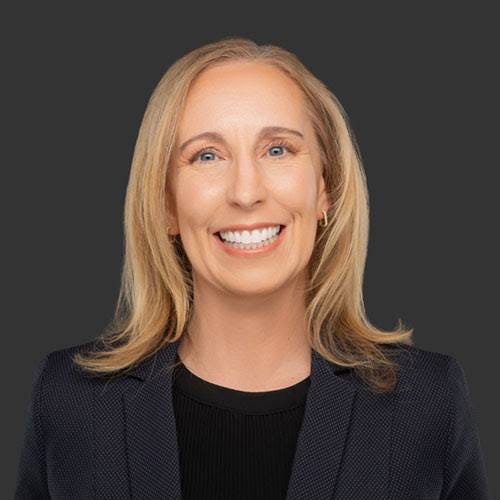
I recently sat down with Jennifer Morrell, CEO and co-founder of The Elections Group, to talk about how a clerk quitting on the Friday before Election Day turned into a career, what running elections taught her that outsiders cannot fully appreciate and why she thinks the staffing problem sits underneath almost every other problem in the field.
On a personal note, I owe Jennifer a great deal. She is the person who hired me at The Elections Group, and she continues to be generous with her mentorship and support.
In this Q&A, we discuss her path from the U.S. Air Force to an accidental first election, her years as elections director in Weber County, Utah and director of elections in Arapahoe County, Colorado, and the audit work she started in 2017 that has shaped most of the last decade for her.
This conversation is part of the ongoing Books & Ballots Q&A series highlighting the people shaping election administration from different angles — research, practice, policy, and everything in between.
How did you end up in election administration? Was there a moment or experience that pointed you in that direction?
I was a candidate on the ballot several times. Then we had an unfortunate situation in our city. Our city clerk quit on the Friday before Election Day, and the mayor came and asked if I could help. More broadly, this is what set the initial hook and what still drives me. I like hard problems. I like thinking about how to solve challenging things. That was certainly one of them.
I spent a few days trying to figure out what was required to run an election. I read state statute. More importantly, I started talking to people and connecting with other city clerks. I picked up some of the basics from them, but I also came away feeling like I had a support network I could lean on if I needed it.
That is what got me in. What kept me is that I owe everything to that first election, and to the great poll workers who actually knew what they were doing, unlike me. Afterward I stepped back and thought, this went okay. We ran an election and it was successful. But it could be better. When you get deep into the weeds of what it takes to run an election, and you realize democracy hinges on this, you start to think maybe there is a better way to do it.
My time in the Air Force laid a lot of the foundation. It is a community where the ethos is that there is no room for error. Everything is done by the book. You have to have written procedures for everything. You learn your job, and not just the mechanics of it. It matters that you learn the broader history of the Air Force and understand the mission you are part of.
There is so much of that we can apply to election administration. You also spend a lot of time going through exercises so you can do your job under challenges and look for gaps in the way you prepared. And then there is the review, the audit, the Air Force inspector who comes in to look at how you are doing your job and highlight what you are doing well and where the gaps are. I really loved that. When I exited the Air Force, they were starting to embrace business process improvement, and I loved that too.
All of it unknowingly created a space for me. So when I became aware that I could make working in elections a career, I found a home.
A lot of people admire the way you serve as a connector between the people who run elections and the people who are interested in and research them. What did your time running elections teach you that people who have not done it cannot fully appreciate?
The timing and the preparation. Elections have become so much more complex, but that part has not changed.
Running an election is not like other things, where you can just prepare a lot in advance. Some things do have to be prepared far ahead. So there is a strategic planning element to it. Understanding the different tasks that need to happen, when they need to happen and who needs to do them, and then being able to orchestrate all of that.
I think many people do not understand that some things simply cannot happen until 30 days out, or 20 days out. You have to take advantage of whatever time you have to plan for how it is going to go, but you cannot actually do the thing until a deadline has passed. Few people understand what that looks like, or the pressure it puts on election officials.
You see it with people coming in new to the profession who have to face a large or prominent election. They do not fully understand it until they go through it. Then it hits them.
Election officials can understandably be skeptical of outsiders who show up with advice. You have been on both sides of that dynamic. How does your experience running elections shape the way you approach offices now?
Do not underestimate competency and caring.
It helps for an office to know that the person walking in can talk confidently about whatever they are there to support. Pre-election testing of equipment. Processing mail ballots. Getting a polling location set up. You can speak the same lingo. You can acknowledge what the challenge is and show you understand all the moving parts. That competency helps.
Sometimes it is also just acknowledging that this is hard, or that it feels overwhelming right now. Even when you are not walking into a crisis, even when you are only there to give advice, it helps to acknowledge that maybe we do not have all the answers. That human element matters. Show that you care.
Sometimes that has to come first, right? Meeting them where they are.
Right. Sometimes they need somebody to rant to, or a shoulder to cry on. Then we can talk about what it is we need to get done today.
This series exists in large part to get researchers and election officials to understand each other better and work together more. So let me ask you from the practitioner side. What do researchers get wrong or miss about the day-to-day reality of running elections? And are there strategies or tools that would make their work more useful to the people running elections?
Timing is the big one. Whatever they are researching or advocating for— a change in communication practices, how we do post-election audits, or analyzing voter registration data — time does not stop so the election official can focus on making that change, or implementing that practice, or even understanding the recommendation.
I have also encouraged a lot of those folks to find a way in. Go be a poll worker. Volunteer as a temporary worker. Shadow an election official, especially as we get closer to the election. But even when it is not deep in the election season, even on a normal day, go understand what the day-to-day reality looks like for an election office. Who is in the office? What does their staffing look like? Spending a day or two or three or five in an election officecould be tremendously helpful.
The research is great. But it is also important to fully understand the constraints on implementing the recommendations that come out of that research.
You started your audit work in 2017 and then left Arapahoe County in 2018. Since you worked in an election office, what has stayed the same, maybe stubbornly so, and what has changed the most?
There are so many more resources now, even than when I left. And there are far more resources for local election officials than when I started, which is to say there were none. At the time, I did not know where to go learn how a certain task should happen, or what a process should look like. I have been out of running local elections for almost 10 years, and we’ve thankfully seen a lot of progress made on resourcing that community since then.
Elections now are also much more complex, not only compared with when I started in 2009, but compared with when I left Arapahoe County in May 2018. The information environment especially. We did not have to navigate that.
What has stayed the same is that we are still understaffed. You have heard me say that election officials need three things to be successful. They need enough staff with the right skills. They need enough space to do their job. And they need the right equipment to do it.
We have started to narrow the gap on two of those; there has been more state and federal funding for equipment, and a lot of funding has gone toward new facilities. That has been great to see. But I still do not see the staffing gap closing.
So many offices have full-time employee levels that were never enough to begin with, and some are still carrying unfilled vacancies on top of that. That creates a constraint with a lot of downstream effects. It was true when I came in as an almost-office-of-one. When I moved to Weber County there were about four of us full time, plus a lot of temporary workers. I thought I was living large in Colorado because of the size of my team. Looking back, it was still really stressful for people. I do not know that it was a right-sized team for the number of voters we served. It continues to be a challenge for jurisdictions of every size across the country.
What problem in election administration do you think is most urgent and least addressed right now? Maybe that is just an extension of your last answer.
I think it is, because of what happens when you are understaffed. You do not have time for training. You do not have time for professional development. You do not have time for deeper strategic planning, or to work with the people who could help you with it. And you often do not have time for process improvement. I hear that a lot.
We have been doing a number of workshops this year directly with election offices, focusing on the creation of standard operating procedures. In the course of helping them document their processes, when you start to think about ways they could improve, you hear the same thing: we do not have the time to document how we do it today, let alone think about what it could be.
Staffing is more of a root cause than we realize.
Last question. If you were not working in elections, what would you be doing? I think I already know the answer to this one. Baker?
I would love to open a bakery.
The problem is that I do like hard problems and hard challenges, and I like feeling as though I am part of something bigger. So I am really interested in environmental issues. I keep close tabs on what is happening there, especially in my own state, as we deal with wildfires and water shortages and who gets to own the rights to land and what we do with that land. I find that really interesting. I am also really interested in women’s health and maternal health.
So if I were not working in elections, I would probably still be doing something very similar. Advocacy, or trying to contribute in some way to some of these harder problems we still have not solved.