

I recently sat down with Thessalia “Lia” Merivaki, an associate professor at Georgetown University with a joint appointment across the McCourt School of Public Policy, the Center for Tech and Public Policy and the Massive Data Institute, where she co-founded the Digital Trust Lab. We talked about how she found her way from a planned career as a European diplomat into election administration research, what it takes to earn the trust of election officials who start out skeptical, and what becoming a U.S. citizen has meant for the way she sees her work.
In this Q&A, we discuss her path from political science in Greece to a campaigning program at the University of Florida (Go Gators!) to the study of voter registration and election communications.
We also get into why she believes informational barriers deserve as much attention as institutional ones, what a year of driving around Mississippi taught her about building trust with skeptical election officials, and which underserved voters she thinks the field still has not studied closely enough.
This conversation is part of the ongoing Books & Ballots Q&A series highlighting the people shaping election administration from different angles — research, practice, policy, and everything in between.
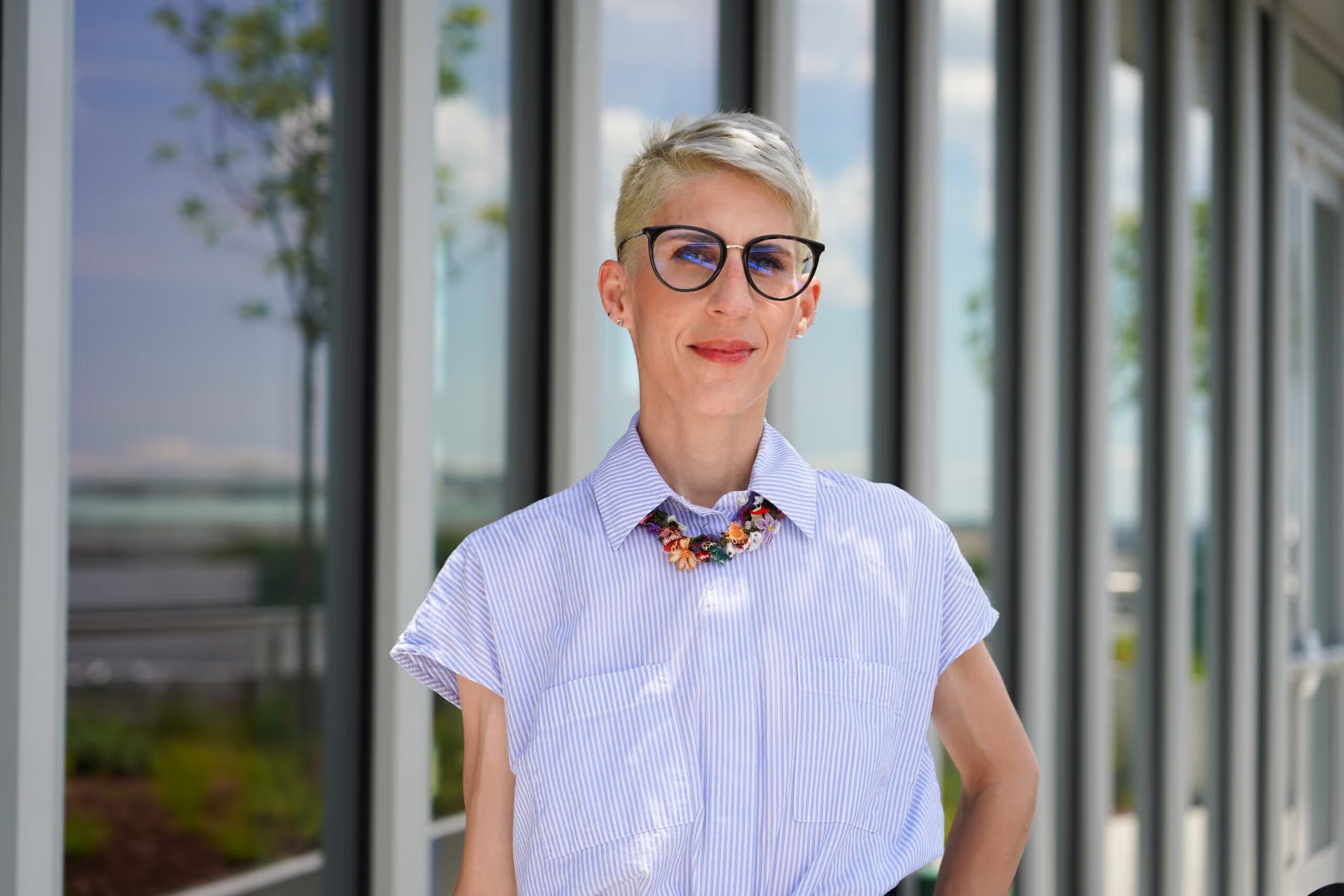
Describe what it was like growing up in Greece.
I was born in Athens. Greece is a small country, and I had a pretty normal childhood. I was an athlete. I played basketball, and that was a big part of my life until I left for graduate school. College was fun, and not as intense or stressful as it is in the United States.
Politics was always part of my life. Both of my parents were politically active. When I was in college, my dad ran for mayor of his town, and I ran his campaign as his campaign manager and communications director. That planted the bug for campaigning. The socialization around voting that we talk about in the United States, I lived it. I went to vote with my parents and watched how it worked. Voting in Greece is very different. You vote on paper, it is a list-based system, you put your ballot in an envelope and then in a box.
Another value that guides my work comes from there. I believe in the right to vote. I understand abstention as a political choice, but I believe in the act of voting. It matters that we vote. Being part of a team shaped me too, and I bring that into my research and my teaching. Elections are a big team.
Athens is often called the birthplace of democracy. Does that ever feel like a through line for you?
I like to claim that heritage. When I came to the United States, I was proud to say it. Ancient Greece and modern Greece are very different things, but when I say I am from Greece, there is always respect and appreciation for what the Greeks contributed to democracy. So I will take the credit!
How did you end up studying election administration as a political scientist? Was there a moment or experience that pointed you in that direction?
Election science was not the plan. I got my undergraduate degree in political science in Greece, and I wanted to be a diplomat. I was going to work in Brussels for the European Union, be a very cool diplomat and live the life.
I started getting interested in campaigning in 2009. I spent six months in Brussels working for the EU during the European Parliament elections, and I got to work with a few big-name campaigners from the United States. One of them was Joe Trippi. He was talking about communicating through social media and how it would transform elections and campaigns. That pulled me further into the campaigning world.
That is how I started thinking more intentionally about graduate school. I chose the University of Florida because it is one of the few schools with a political campaigning program. Even then, election research was not the plan. I figured I would get my degree, go back to Europe, campaign and maybe still be a diplomat.
Like a lot of these origin stories, I stumbled into election administration. I was taking a class on bureaucratic politics, and I read a paper by Martha Kropf and David Kimball on provisional voting and HAVA. I was deep in learning about American elections at the time, the Electoral College, federalism, all of it, because I did not have that background from Greece. European elections work very differently. We do not register to vote; the system is more uniform. Coming to the United States and seeing this infrastructure, I was mesmerized and puzzled that it could be so different depending on where you live.
I read that paper and thought it was gold. Provisional voting is fascinating and complicated, and voter registration sits at the heart of it. That is how I got drawn in. I was fortunate to work with Dan Smith and Michael McDonald, who had already built a network with election officials and did a lot of applied research, so I was exposed to that early.
From there I went deeper into the details, especially voter registration. Why does it differ across the states? How do all those small rules, from the registration deadline to where you sign the form to how the form is designed, shape who makes it onto the rolls and who does not? Not being a citizen actually helped me think more institutionally about how these systems should be designed. People used to ask how I could study this when I was not even a citizen and had never voted. I would say I am completely unbiased in that respect.
Now I am in it. There is no way out. I live and breathe election administration.
A lot of your work focuses on the communications side of election administration, which in some ways is the piece closest to campaigns. What keeps that interest alive?
The value that drives my work is that everyone should have equal access to voting. It is about voting rights and how we protect the right to vote. It is very voter-centric. How do we design a system where voters have the opportunity to participate, have positive experiences and can hold their representatives accountable?
That has grounded my research. Most of my work over the last five or six years has been about communications, but it started with institutions: how we design policy, how policy shapes administration and how administration shapes behavior.
Through that work, it became clear that we had spent a lot of time on institutional barriers and not enough on informational ones, and that one shapes the other. Even an accessible policy does not help if people do not know it exists or do not know how to use it. A turning point for me was a report Paul Gronke wrote with Natalie Adona, when she was still at the Democracy Fund, on the voter experience in 2018. Some voters said their state did not have online voter registration when it actually did. People were not using it because they did not know about it. We had spent so much time on voter suppression and restrictions, but even good policies can have bad outcomes if people do not know about them. That is when we started thinking more seriously about information and communications. Then in 2020, with COVID, it became clear that social media is a new frontier for exchanging information, and that election officials are part of that network. So we should study what they do.
Books & Ballots exists to make researchers more accessible to election officials, and the other way around. So much of that work runs on relationships. How do you approach building them, especially with officials who start out skeptical?
Context matters a lot. When I was in Florida, at least around St. Petersburg and Gainesville, the election official community was already aligned with research. Supervisors of Elections collaborated with researchers. It was easy to invite a supervisor to class to talk about registration, and they were excited to hear about my work.
When I moved to Mississippi, it was much harder. Election officials there were skeptical. The questions were, what do you want, are you going to sue me, what are your motivations. There was real distance from the research community.
So my approach was to spend time. I was fortunate to get a grant from MIT that let me do it, and I spent my first year on the tenure track driving around Mississippi meeting election officials in person. I told them I was a researcher who wanted to build relationships and support the community, and that I did not have an agenda beyond doing research and supporting their work. It was time-intensive, but it was fun, illuminating and insightful. I brought students into the process, which helped me build relationships with officials within about a two-hour radius of Starkville. Even getting an audience with the secretary of state was hard at first. Once [Mississippi Secretary of State] Michael Watson was elected, it became much easier to work with that office.
It took good faith and a lot of reassurance that I did not have bad intentions. It matters that election officials feel safe, that they trust we have good intentions and are not just there to take their data and publish a paper. We are part of the community, and we want to share our expertise and secure democracy together. Every time I talk with election officials, the first thing I ask is, how can I support you? What do you want to do, and how can we help you get there? I try to be a resource. And I always thank them for their service, because the job is very hard and they deserve far more credit than they get.
You spent years studying American elections as a non-citizen, and you recently became a U.S. citizen. What has that transition meant for how you see your work?
It makes it feel more real. People who criticize the process always say you have to live it, you have to be a poll worker, you have to vote, you have to go through it yourself. I already had a lot of faith in the system from my conversations and my work as an observer. But now I am excited to gain insights I can only get as a voter and to bring those lenses to my research.
I was not able to vote in 2024. I did not get my citizenship in time. The June primary in Maryland will be my chance, and the first thing I want to do is register and serve as a poll worker. I think that will help me see things my perspective has been missing. I will be a fuller researcher once I have lived through the process.
What’s the question in election administration you think is most urgent and most understudied right now?
One of the least studied areas we need to understand better is language minority voters and voters with disabilities, and their distinct needs. That population is very hard to study systematically. We also need to spend more time on primary elections and how they are run, and on the role of parties in selecting and training poll workers, all the structures around core election administration that shape how it functions. Budgets matter, of course. But I would prioritize underserved voters and how we can study and understand their experiences intentionally and respectfully so we can serve them better, especially in states where resources are scarce and where the typical election official does not resemble those voters.
Last question. If you weren’t studying elections, what would you be doing?
That is a hard one. I think I would still be somewhere near political science, but I would most likely be running for parliament in the European Union. If I had stayed in Europe, I would be politically active and trying to be a legislator there. And probably still playing some basketball on the side.