

I recently sat down with Paul Manson, a research assistant professor with the Center for Public Service at Portland State University and director of the Elections & Voting Information Center, to talk about how a decade of local government consulting turned into a career studying election administration, what makes election offices unlike any other local government function he studies and why he pays closer attention to how elections get paid for than to what they cost.
In this Q&A, we discuss his path from a master’s in public administration to consulting work on the West Coast to a PhD in public affairs and policy, the beer with Paul Gronke that turned into a job, and what the Local Election Official Survey is trying to accomplish as it approaches the 25th anniversary of the Help America Vote Act.
We also get into his advice for researchers who want their work to matter to practitioners, why he thinks public administration scholars bring something distinctive to the field, and the difference between studying what elections cost and studying how they are funded.
This conversation is part of the ongoing Books & Ballots Q&A series highlighting the people shaping election administration from different angles — research, practice, policy, and everything in between.
The Elections & Voting Information Center at Portland State University fields its Local Election Official Survey every year. First conducted in 2018, the nationally representative survey tracks the administrative, policy and operational conditions facing election officials across the country. It captures data on workforce well-being, public trust, budgets, technology and the real-world impact of state policies. The findings give researchers, policymakers and practitioners a clearer picture of what it takes to run elections in America.
If you receive an invitation to participate, we encourage you to take the time to respond.
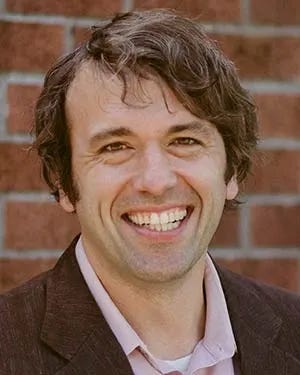
How did you end up studying election administration as a political scientist? Was there a moment or experience that pointed you in that direction?
I can play a political scientist on TV. But no, not technically. My PhD is in public affairs and policy and it was more focused on policy studies and public administration.
Here is the deep history. I started out as a practitioner. After I finishing my master’s in public administration, I spent about a decade in the consulting world with state and local governments on the West Coast. I did a lot of support for transportation planning, environmental planning, land use, facilitation, public meetings, surveys, and a lot of just whatever would be helpful for counties, cities, the state and sometimes a federal partner.
Somewhere around 2010, I started getting grants as a consultant to do research for federal agencies, including through the Transportation Research Board. And I thought, “wow, people get paid to ask questions and go read things and talk to people? That is fun.” That convinced me to start thinking about going back to grad school for a PhD. A grant came through with a faculty member I know well that could support me, so I went back.
Public affairs and policy tends to focus on policy studies. How policy evolves. How policy gets implemented. My doctoral work was survey-based research in Oregon on attitudes toward environmental issues, so I was doing a lot of natural resources and environmental law and policy work. Much of it with a focus on the local government level.
Then in 2018, Paul Gronke was literally just across the river. We would chat professionally and as friends, and he mentioned he was trying to get this survey thing going again that had not happened since the Congressional Research Service work. They were having some challenges on the survey administration side. How do we do it? How do we get the survey out in the field? How do we get response rates up? How do we write the questions? I said, let’s get a beer and talk about it. That turned into a job.
So I started working with Paul at EVIC as an almost-done-with-a-PhD graduate research appointment, and it grew from there. The story I tell is that I have always been a local government scholar. I have always done work with local governments and I have always been interested in that space. I was also a survey researcher. The two came together for this elections work. I entered the election administration research world first and foremost as a survey researcher doing local government work, then pivoted into the nitty-gritty of election administration.
What has that experience been like, working with and learning from election administrators across the country?
It is really interesting, and I have a useful comparison because I still do other local government work in different areas. I have research in emergency management, looking at how cities and counties do their planning for disaster preparedness and response. I also do some workforce and HR research, surveying offices on their structures, their internships and career development.
Compared to that work, election offices are way more diverse. The type of work they do, the way they structure their work, the state rules, the local rules. It varies so much more than in those other fields.
An emergency manager will vary from state to state to some degree, but there is a framework nationally that really helps structure that, and there is a strong association structure and an accreditation system. So they all think and speak a little bit more of a similar language. You see the same thing with HR professionals. They are thinking about federal law that guides their work and compliance, so it is structured very similarly. Even in some environmental policy areas. I get to do some fun parks planning work, and there are national standards for how to do parks planning.
Elections are just so decentralized that you could randomly pick five offices and they will not look the same. They are going to look very different very often. That is driven in part by how much election administration varies state to state, and how much it varies even within a state based on county structure or town or township.
So that diversity of practice is just really, really interesting. I know it is also a source of challenges for folks who want to draw broad conclusions about the state of practice.
How do you approach practitioners in a way that makes them less likely to be skeptical of your work or your intentions?
First and foremost, they are the experts. They know their stuff, and I am here to get told where I am wrong. That has always been how I approach this.
There are general things we can all hear about out there in the world. But when you get into the day-to-day details of election administration work, that expertise is going to be with the practitioners. So I defer to that. What I want to do is help capture as many of those stories as I can and see where there are common through lines that others can learn from, or identify places where there are bumps in the road. By looking across the U.S., we might learn about different practices that help address a problem, or anticipate potential pain points if there are shifts in court cases, federal legislation or state legislation.
The other piece that really drives this, and it is part of the model I have here with the university, is co-production. What that means is we want to make sure any research we do adds value to the field, and that practitioners have a seat at the table in the design of research where we can manage it.
You see that with the Local Election Official Survey. We reach out where we can to officials who might have good ideas about where the research should go. An association will tell us they need to know more about a particular issue. A state office will say that if we add some sort of national measure they could compare against, it would help them understand whatever it is they are studying better. That co-production piece is key. We are academics who want to engage. I am not the practitioner, but I want to bring the academic piece to help them out.
Can we pull on that thread a little more? Beyond the survey, what are the concrete things researchers can do to make their work more relevant and more applicable to what practitioners actually experience?
There are a couple of strategies, and this holds for local government work broadly, not just elections.
When I talk to other shops that do this kind of work, I always encourage them to think about creating a “kitchen cabinet” or group of advisors. Those might be the local government contacts you have in your region, the city managers, the county executives, whoever is relevant to the policy domain you work on. Have some sort of informal way to touch base with them. Make it a place to listen more than a place to tell them about your cool research. Look for what their worries are, what they are trying to read the tea leaves on, and then think about what research questions might help them work through that uncertainty or figure out what comes next.
The main recommendation I always make is to be available and be present. Be happy to do a brown bag lunch for their staff. Go hang out at the state capitol or at city hall or at the county offices. Just be present and available. At the same time, look for places to be helpful when folks are engaging through their state associations of counties and cities or the local equivalent of NACo. That is a great place to be, and you learn a lot there.
I was at a conference last week, and probably 50% of the value for me was just hearing what people are worried about and what they are working through. Being present also builds relationships, so at some point some of those offices will call you up and say they are struggling with a question and ask if you can help.
You mentioned that academia is not always set up to reward that kind of work. Paul Gronke has talked about the same thing. How much of a barrier is it?
It is a real one. This is more true in some disciplines than others, but we are rewarded for doing good work, not necessarily for doing helpful work. That does not mean good work is not good, or that helpful work is not good. It is just a different rewards structure, and I think that is an unfortunate barrier.
What I will say is that I feel more at home in a public administration department in many ways, and in that discipline we do not have the same incentive structure. What has been interesting about the election administration space is that it has been more heavily political science. There are more political scientists, just numerically. There are probably 10 times as many in the U.S.
But watching how ESRA has evolved, or even the Southern Political Science Association meeting. We are seeing more public administration scholars playing a bigger role, and more sociologists and historians – engineers too! There are other disciplines that can add to the conversation and that may have reward structures more helpful to practitioners. Public administration makes a ton of sense to me, hands down, in part because we tend to train a lot of the staff at the local level.
Tell me about the Local Election Official Survey and what you want people to understand about it.
Paul Gronke has been thinking about an event on the horizon: next year is the 25th anniversary of HAVA. So where are we, looking back over this period? Some initial survey work was done right after the passage of that legislation to assess those first impacts. Our work is really meant to extend that long view now. Twenty-five plus years of how local election officials are doing, what challenges they face and what they need to be successful. Since 2018, when we restarted this effort, we have tried to continue that thread every year.
The way we put it is that we want the survey to amplify local voices. What are the things happening at the township, city and county level that policymakers need to hear and that state houses need to hear, but might not, absent the survey? There are other ways officials can voice their pain points, of course. But that is our goal here.
The second goal is to bring a tool that helps election officials themselves advocate for what they need. I know of a number of jurisdictions that have pulled in our data to advocate for hiring increases or pay increases, because they can point to a national number and say, we are not like these other numbers and we are trying to adjust and catch up. We want to help in that way.
The third area is supporting academic teams and nonprofit teams that are struggling to know things about these offices. One thing that has really evolved in the last three or four years is that we are now a multi-university team, and we try to coordinate across a lot of different groups looking at different research questions. So we are also trying to build the data infrastructure for election administration research.
What is the question in election administration you think is most urgent and most understudied right now?
I am going to pick one of my favorites. We spend a lot of time in different fields arguing about the cost of elections. I worry about the ongoing sustainability of the funding of elections.
I do not know that we have a clear sense of what the different revenue and budget models are across states. We have some hints, based on whether states are supporting elections with some mix of state general fund and local funds, whether they are using reimbursement rates, whether they are using non-election-related enterprise revenues. The way we have taped and baling-wired our funding for elections is a different question than the cost side.
That is something we really need to pay attention to, because I think it is more sensitive to political and macroeconomic forces that have nothing to do with the needs in an election office, but that would absolutely be a threat to an election office if things turn the wrong direction.
There are a lot of shorter-term things we worry about too. The degree to which local offices are ready to take on the legal challenges of any federal or state shenanigans around elections, for one. Do they have access to attorneys? Do they know how to access them? Do they know what to ask for? And obviously there are all the postal service worries out there. But a lot of that is short-term policy noise, and part of the work is figuring out what is noise and what is real.
Last question. If you weren’t studying elections, what would you be doing?
If I was allowed to do it, I would go build wooden boats. I would have a nice shop, maybe somewhere on Puget Sound, maybe on the Oregon coast, and I would build some pretty sailboats.
Nice and quiet life. Get out on the water in the evenings.